
Data Sync in Server-Client
Data Synchronization in Server-Client Architecture (Internal Tags)
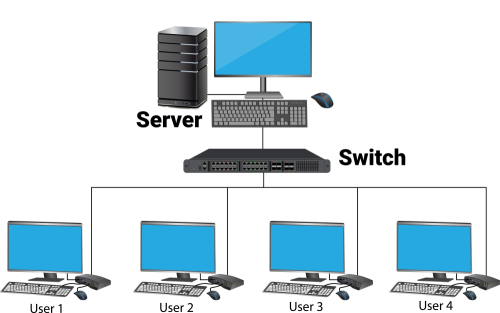
Working Principle:
- Centralized Management: Internal Tags are physically stored in the Server station’s memory.
- Real-Time Access: Client stations access these variables transparently over the network. When a Client reads an Internal Tag on the Server, it sees the most up-to-date value immediately.
- Bi-Directional Interaction: Depending on authorization permissions, Client stations can write data to these variables. A change made by a Client is instantly reflected on the Server and subsequently (via the Server) to all other connected Clients.
Why Use It? (Use Cases)
This architecture ensures system integrity, especially in the following scenarios:
- Recipe Management: Recipe parameters are stored as Internal Tags on the Server. When any operator (Client) changes the recipe, all stations on the production line utilize the updated formula.
- Global System States: Global flags such as “System Maintenance,” “Shift Change,” or “Emergency” are managed from a single point and synchronized across the entire facility.
- Inter-User Messaging: A common data pool is created for operators to leave notes for each other or transfer shift information.